


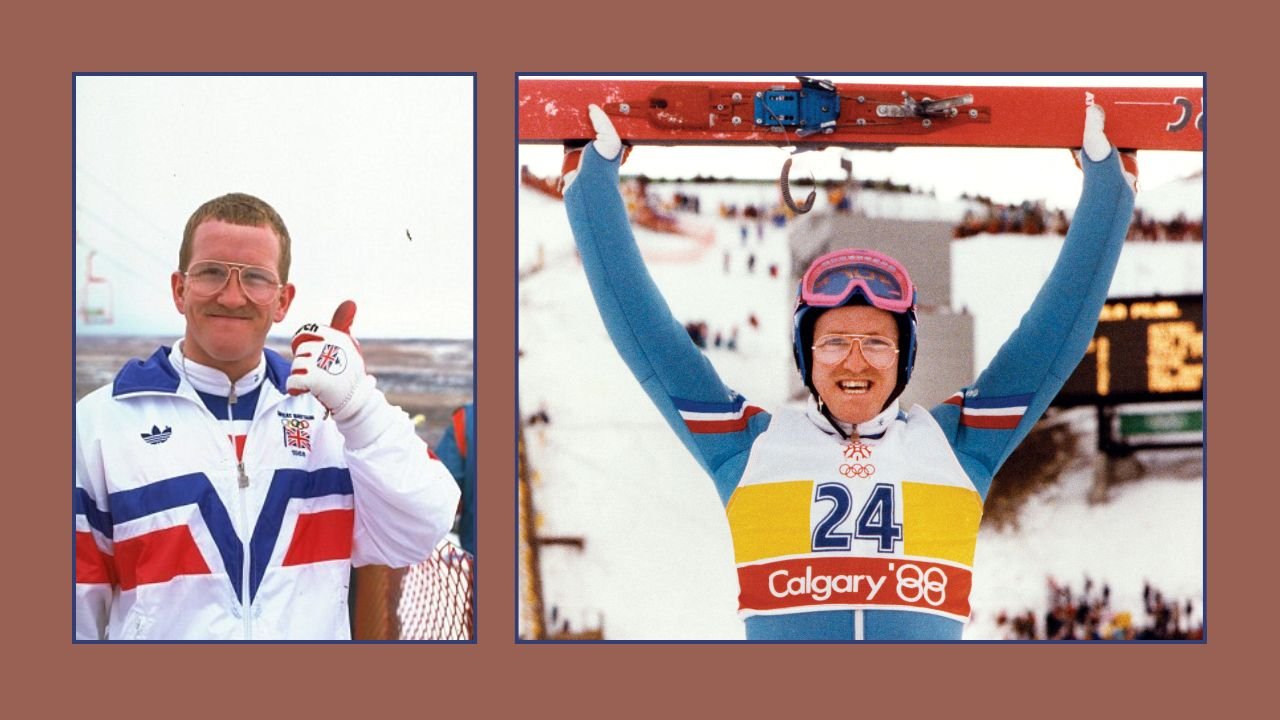
Edwards Eagle echoes strength, courage, and an underdog spirit that has captivated millions around the world. This phrase doesn’t refer to a literal bird, but to a man whose determination, resilience, and unorthodox path to Olympic history transformed him into an unforgettable symbol of perseverance. In this article, you will explore the full story behind Edwards Eagle, detailing his life, challenges, accomplishments, and the legacy he built by soaring beyond expectations.
What Does “Edwards Eagle” Really Mean?
When people use the term Edwards Eagle, they are often referring to Michael Edwards, popularly nicknamed Eddie “the Eagle” Edwards, a British ski jumper whose personality and career soared far beyond his competitive results. His nickname captures the essence of how he approached life and sport — with fearless ambition and a refusal to accept limits.
The term Edwards Eagle ties together his surname, Edwards, and his nickname, Eagle, which he earned through his daring ski jumping exploits and his ability to capture the public’s imagination at the 1988 Winter Olympic Games in Calgary, Canada.
Early Life of the Man Behind Edwards Eagle
Michael Edwards was born in Cheltenham, England, into a working‑class family far removed from elite athletics. From a young age he was curious and determined, yet skiing was never part of his formal upbringing. Edwards began with ordinary ski training but soon realized that competing at the top level in alpine skiing was nearly impossible because of funding barriers and stiff competition.
His pivot to ski jumping came from a unique realization: Great Britain had virtually no ski jumpers, offering him a rare route to the Olympics. With no sponsor, no professional coach, and no advanced facilities, Edwards started training independently. This decision became the origin of the Edwards Eagle journey — a man pushing against every assumption and limitation placed before him.
From Plasterer to Olympic Dreamer
Before he was known as Edwards Eagle, Michael Edwards worked as a plasterer. His humble profession did not prepare him for snow, wind, or ice, yet it provided an inner strength and work ethic unmatched by many trained athletes. Rather than shrinking from the challenge of ski jumping, he embraced it with unshakeable belief that he could represent his nation at the Olympics.
Edwards used every resource available, often training in second‑hand equipment and wearing multiple layers of socks to make ski boots fit. These improvisational strategies reflected his unique approach — one that prioritizes passion over perfection. Despite these challenges, his grit and tenacity earned him a place to compete on the world stage.
The 1988 Winter Olympics: Where Edwards Eagle Took Flight
Calgary and the Birth of a Legacy
The most pivotal moment in the story of Edwards Eagle came at the 1988 Winter Olympics in Calgary. Edwards qualified as the sole British entrant in ski jumping, out of sheer perseverance rather than conventional athletic prowess. Although he finished last in both the 70m Normal Hill and 90m Large Hill events, his spirit and unmistakable passion drew widespread public support.
During these Games, Edwards didn’t just compete — he became iconic. Wearing thick glasses under his ski goggles and waving to cheering crowds with a huge grin, he embodied a truth that continues to inspire: the value of effort is not measured only by medals but by courage.
Instead of fading into obscurity after finishing last, Edwards became a global sensation. Broadcasters and fans alike affectionately referred to him as the “Edwards Eagle,” a personal emblem of courage, persistence, and the joy of trying.
The “Eddie the Eagle Rule”
The impact of Edwards Eagle was so significant that it led to structural changes in the Olympics. After the 1988 Games, the International Olympic Committee (IOC) introduced new qualification standards, colloquially known as the Eddie the Eagle Rule. This rule requires aspiring Olympic competitors to place in the top 30 percent or among the top 50 athletes in international competitions before qualifying for the Olympics.
This rule effectively made it more difficult for athletes to reach the Olympics through unconventional or underdog paths — the very route Edwards Eagle had followed. Although this change restricted future dreamers from competing in the same way, it also highlighted how much his journey had reshaped the global narrative about athletic standards and possibility.
Beyond Competition: The Lasting Influence of Edwards Eagle
A Symbol of Perseverance
Edwards Eagle didn’t disappear from public consciousness after the Olympics. Instead, his personality and message continued to resonate. He became a frequent guest on talk shows worldwide, gaining admiration for his unwavering positivity and humility. This phase of his life showed that the legacy of Edwards Eagle was not tied to podium finishes but to human connection and resilience.
His story was compelling enough to inspire a major Hollywood biographical film titled “Eddie the Eagle”, released in 2016, starring Taron Egerton and Hugh Jackman. The film dramatizes the journey of Edwards, bringing his underdog triumphs and challenges to audiences across the globe. Through this cinematic portrayal, the message of Edwards continued to reach new generations.
Life After the Limelight
Following his ski jumping career, Edwards did not retreat from life’s adventures. He pursued a law degree, became a motivational speaker, and even released music, including songs that referenced his nickname “Eagle.” These chapters of his life demonstrate that the Edwards Eagle legacy is not merely a moment from the past — it is an ongoing narrative about reinvention and celebrating life beyond one defining event.
In addition to public appearances and speaking engagements, he has participated in television competitions and charitable events, proving that his enthusiasm extends to many arenas beyond ski jumping.
Why the Story of Edwards Eagle Continues to Resonate
Redefining What Success Means
One thing that makes the Edwards Eagle story timeless is its redefinition of success. In a world focused on results and medals, Edwards showed that courage, authenticity, and dedication are equally meaningful. He reminds people that success is not limited to winners — it belongs to those who dare to try.
His experience teaches the world that personal victories are not always measured by ranking or awards, but by how one rises to the challenge, refuses to give up, and keeps flying despite the odds.
Inspiration Across Generations
From athletes to students, from aspiring professionals to anyone facing daunting challenges, Edwards Eagle has become a universal figure of encouragement. His life story inspires people across continents and cultures to dream big, work hard, and believe in themselves even when the world doubts them.
The legacy of Edwards Eagle has also shaped how future athletes view opportunity. While the Olympic qualification rules changed after his era, the spirit he awakened — that passion can triumph over barriers — remains a powerful motivational force.
Lessons We Can All Learn From Edwards Eagle
1. Dream Without Limits
Edwards Eagle teaches us that dreams don’t have to be confined by age, background, or expectations. A dream supported by courage and consistent effort can take you farther than talent alone.
2. Embrace Challenges With Joy
Even when faced with setbacks, fear, and obstacles, Edwards kept his enthusiasm alive. His example encourages us to meet challenges with optimism and resilience rather than fear or discouragement.
3. Redefine Your Own Success
Success isn’t defined solely by medals, trophies, or achievements. Sometimes, success is waking up every day to try again, learning from every setback, and redefining your personal goals.
4. Make Your Own Impact
Edwards Eagle didn’t just compete — he changed perceptions, inspired millions, and became a cultural icon. This teaches a powerful principle: your unique path may have an impact far beyond what you expect.
Final Thoughts on Edwards Eagle
The story of Edwards Eagle is more than a biography of a ski jumper. It is a celebration of the human spirit at its most fearless and authentic. From humble beginnings to the global Olympic stage, Michael Edwards showed the world that determination, passion, and courage can eclipse even the tallest mountains.
Edwards Eagle stands not just as a nickname, but as a symbol of what is possible when an ordinary person chooses to defy limits, take bold leaps, and inspire others to do the same.
MORE LIKE THESE: Frances Cain: Life, Age, Net Worth & Divorce Story
